
The Science
Thirty years of research. Finally, written for women.
Creatine is one of the most studied nutrients on earth. Most of that research was done on men. Here's what it says, what it means for you, and why five grams a day is the number.

Women vs. men
70–80%
Smaller creatine pool to start with.
Women carry far less creatine than men and get less from food.2
Strength
20–25%
Greater gains in women who train.
Versus placebo over ten weeks. Body weight unchanged.2
Sleep
48min
More sleep on training days.
Women on 5g a day plus strength training, in a 2024 randomized trial.8
Focus
2.5×
The mental-speed gain in women, versus men.
How quickly the brain takes in and responds to information improved 2.5 times more in women, across 16 trials.5
01What creatine is
A molecule your body already makes. Just not enough of it.
Not a stimulant. Not a protein. Creatine is a compound your body produces and stores in muscle and brain, where it recharges the energy your cells spend.1 You make about a gram a day. The rest comes from food or a supplement.
- i.
Your cells run on ATP. It's spent in seconds.
- ii.
Creatine holds the spare charge and hands it back, so the cell can go again.
- iii.
Fuller stores mean faster recharge, whether you're lifting, sprinting, or thinking.
- iv.
Taken daily, stores build over weeks and hold as long as you keep going.
The thesis
Same workout. More to show for it.
In women who lift, creatine produced 20 to 25 percent greater strength gains than placebo over ten weeks, and about two kilograms more lean muscle over five to ten weeks, with no change in body fat and no change in body weight.2 That is the whole case in one sentence: not more work. More from the work.
02The evidence
What the research on women actually found.
Most creatine research was done on men. The studies that include women are newer, smaller, and pointing the same way. Five findings, each from a peer-reviewed trial, meta-analysis, or position stand.
Strength + tone
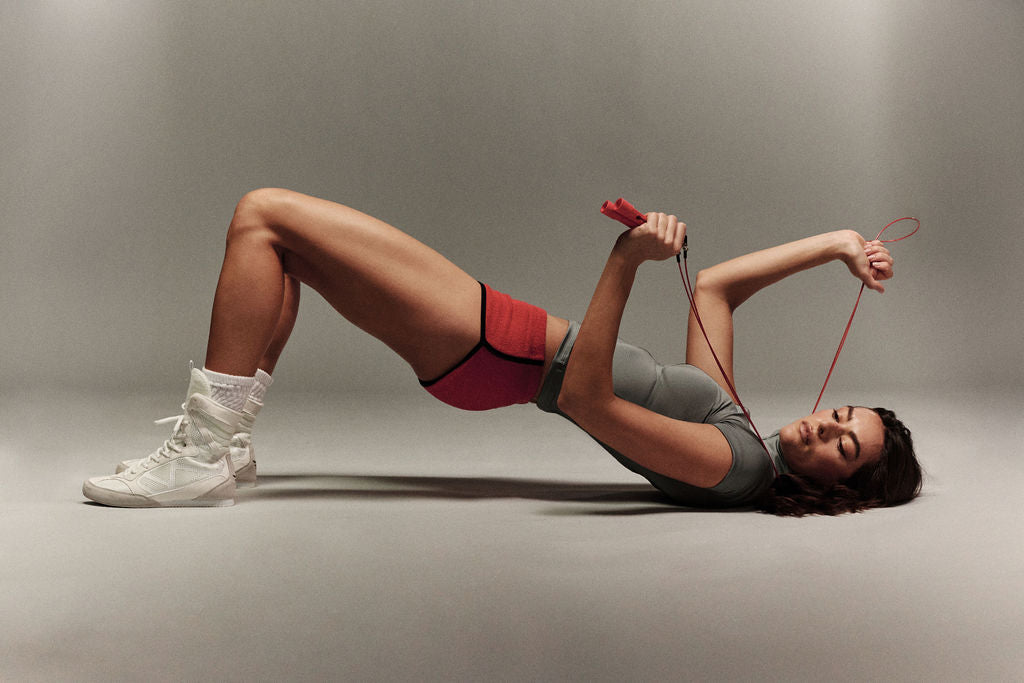
More from the training you already do.
Ten weeks of training with creatine: 20 to 25 percent greater one-rep-max gains than placebo, roughly two kilograms of added lean muscle, no change in body fat or body weight.2 A 53-trial meta-analysis found the strength effect holds regardless of sex, dose, or training status.11 At five grams a day, that reads as tone, not size.
Smith-Ryan et al., Nutrients 2021 · Lanhers et al., Sports Medicine 2017 · ISSN 2017
Sleep
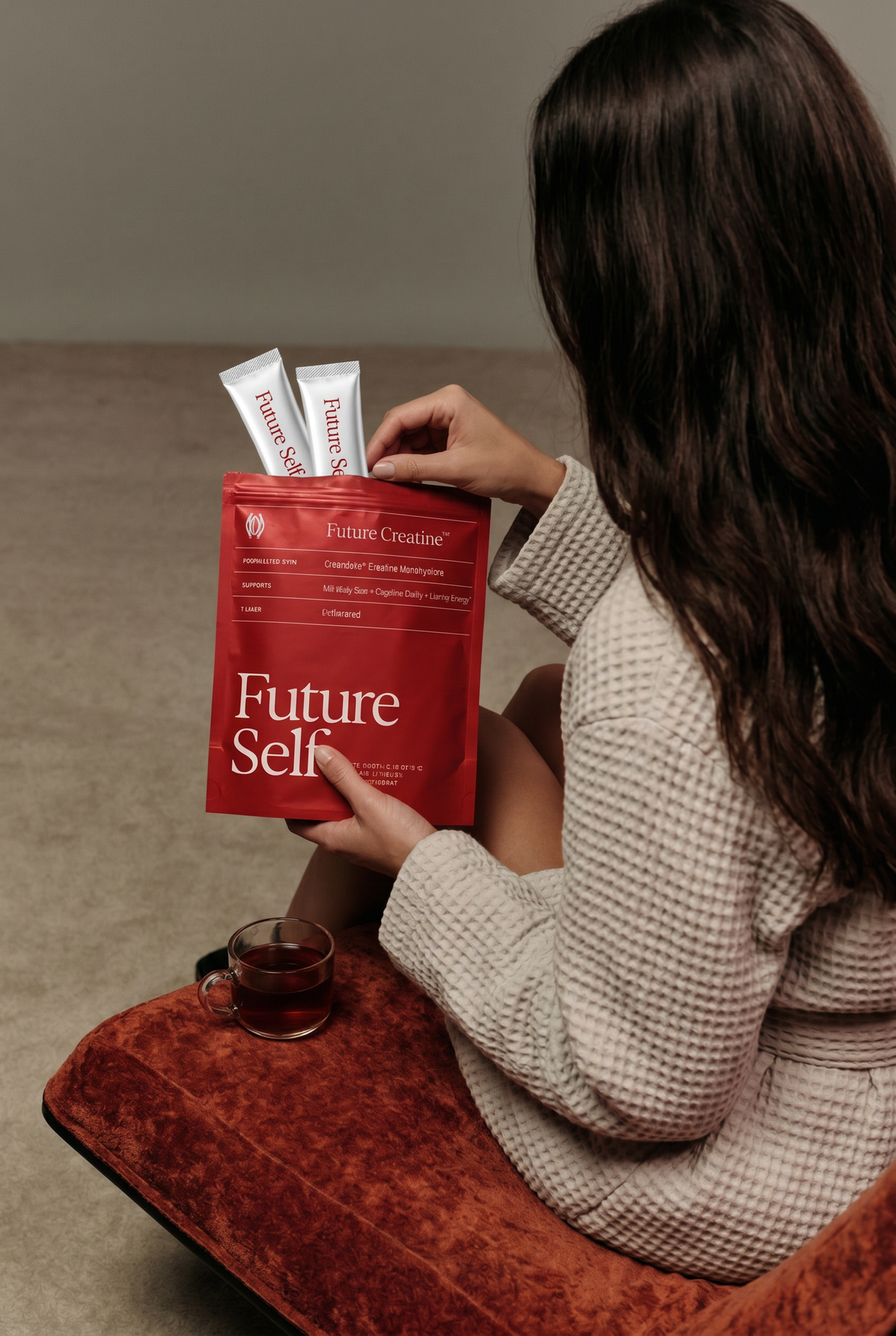
Forty-eight more minutes on training days.
In a 2024 randomized trial of menstruating women, five grams a day plus two weekly strength sessions added an average of 48 minutes of sleep on training days.8
Brown et al., University of Idaho, Nutrients 2024 · n = 21

Focus + memory
Sharper, and faster, in women especially.
A 2024 meta-analysis of 16 trials and 492 adults found creatine monohydrate improved memory, attention, and processing speed, with benefits concentrated in adults 18 to 60. The processing-speed gain was more than twice as large in women as in men.5
Xu et al., Frontiers in Nutrition 2024 · Candow et al., Sports Medicine 2023
Bone
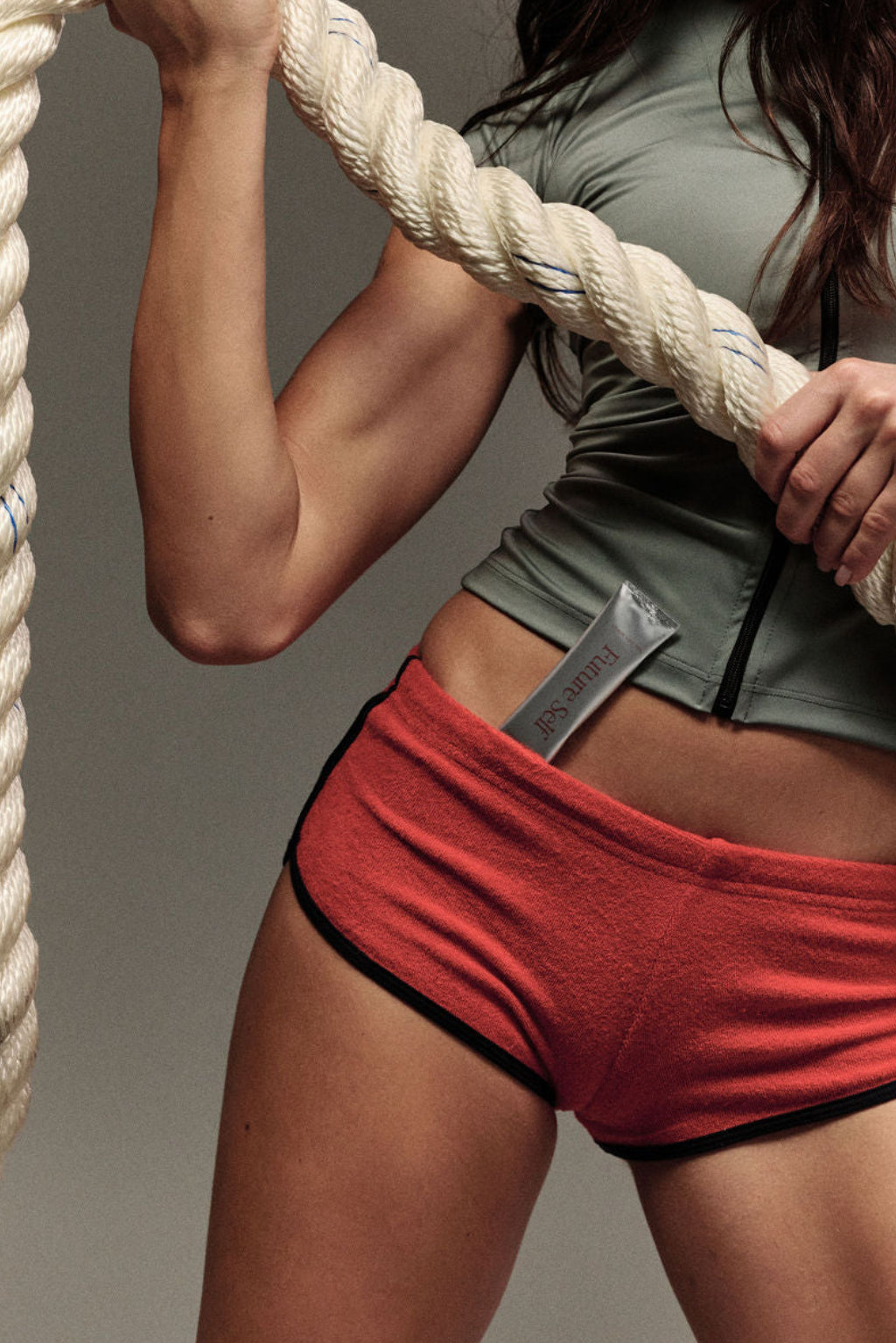
Built for the decades ahead.
Over a year of lifting, postmenopausal women on creatine held hip bone density while the placebo group lost nearly four percent.9 A two-year follow-up preserved hip structure and walking speed.10
Chilibeck et al., MSSE 2015, 2023
Hormones + life stage
Women start with less. And need shifts.
Women carry a far smaller total creatine pool than men, by the common estimate 70 to 80 percent lower, and consume less in food.2 Estrogen and progesterone shift how the body makes and uses it, which is why researchers flag menstruation, postpartum, and perimenopause as the stages where a steady daily dose may matter most.2
Smith-Ryan et al., Nutrients 2021
*These statements have not been evaluated by the Food and Drug Administration. This product is not intended to diagnose, treat, cure, or prevent any disease.
03The dose
Five grams. Every day. No loading phase.
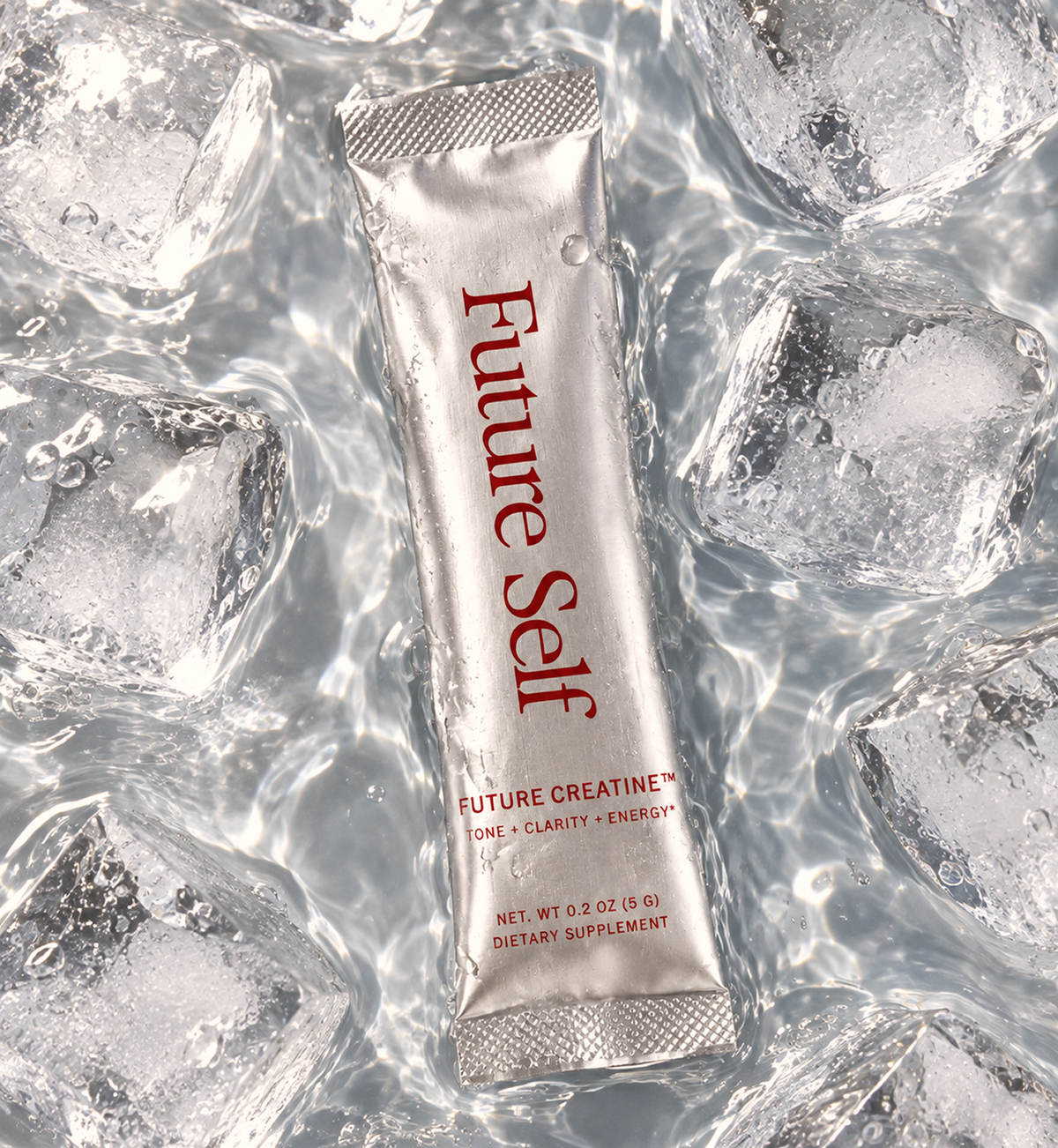
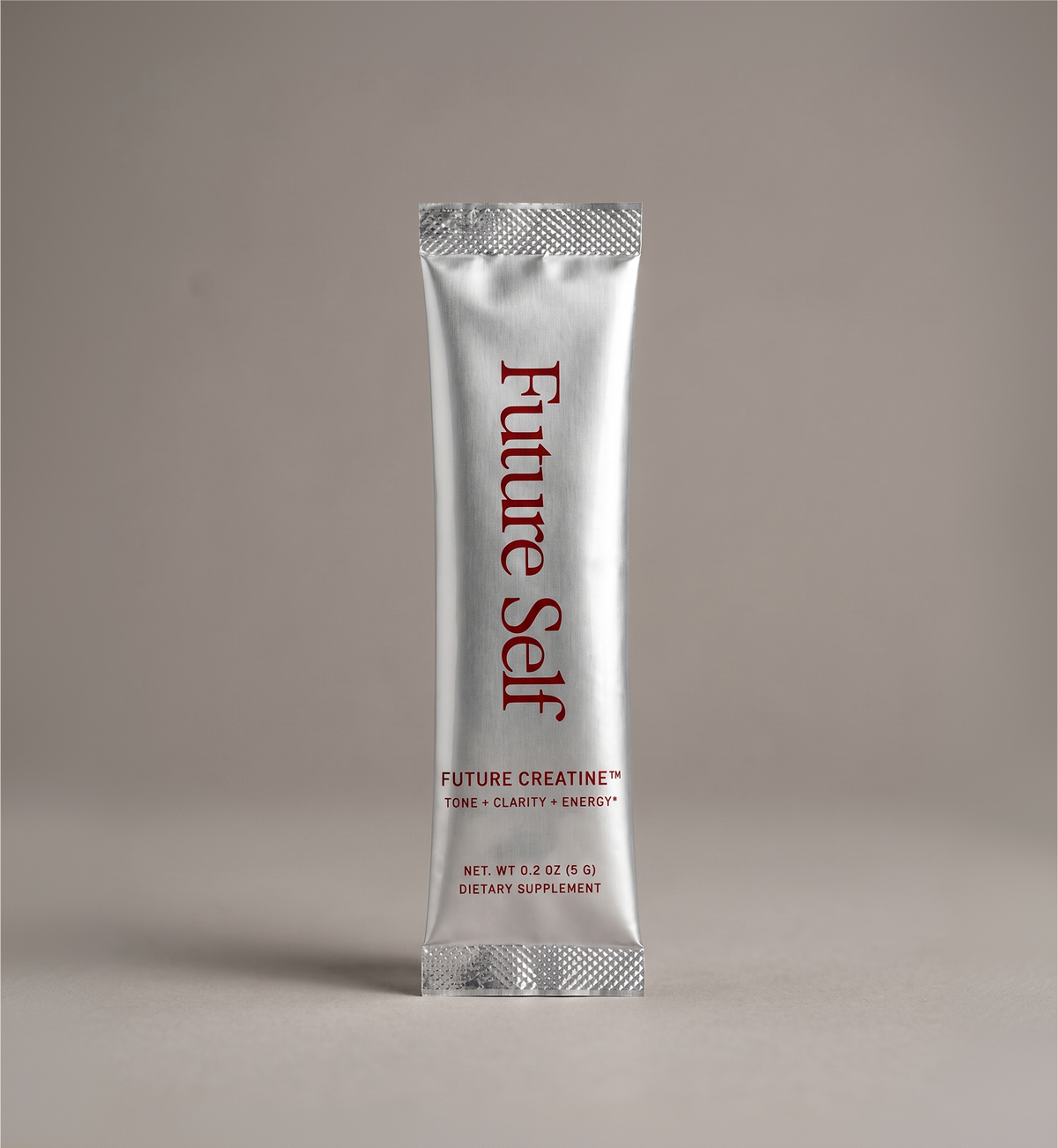
The research dose is three to five grams of creatine monohydrate a day. Taken daily, it fills your stores in about four weeks, with no loading week and none of the stomach trouble that comes with it.1 One stick is the full five. Not a gummy's worth. Not a scoop you eyeball.
Day 1
Stores start building. You won't feel it yet. That's the point.
Day 14
About halfway there. Many women notice steadier energy through workouts and afternoons.*
Day 28
Muscle saturation at a daily dose.1 Strength, tone, and focus benefits are measured from here.*
Day 90+
The habit compounds. Every bone, brain, and strength study above measured months, not days.
Stores respond to the daily total, not the clock.1 Pick the moment you'll never skip.
Creatine pulls water into the muscle cell. 16 to 32 oz per stick keeps you ahead of it.
Stores drain one to two percent a day whether you train or not.1 It's a daily essential, not a pre-workout.
04The molecule
Same molecule the research is built on. Made to a higher standard.
Creatine monohydrate is the most studied form of creatine, with decades of safety data behind it. Newer forms cost more and haven't been shown to work better.1 So we didn't change the molecule. We chose the best version of it: Creavitalis®, made in Germany by the company behind Creapure®.
- Creavitalis® creatine monohydrate5g per stick
- 99.9% creatine monohydrateSpecified purity, tested every batch
- Made in GermanyGMP · EFSA · FDA GRAS
- Micronized for solubilityNo grit. Nothing left in your gut.
- Vegan · Non-GMO · Soy and gluten freeKosher and Halal certified
05What you've heard
Most of what women were told about creatine came from the gym.

It'll make me bulky.
Size comes from heavy volume and a calorie surplus, not five grams of creatine. Creatine helps you get more from the work you already do.1,4
It makes you bloated.
Creatine draws water into the muscle cell, not under the skin. Stomach upset in studies is tied to 20-gram loading days and gritty, undissolved powder.1
It's hard on your kidneys.
Trials up to 30 grams a day for five years found no harm to kidney, liver, or blood markers.1 Kidney disease, high blood pressure, pregnant or nursing: ask your physician first.
It's only for athletes.
That's different. The newest research is on memory, sleep, and bone, and the people with the most to gain start with the least.2,5,9
Gummies are easier.
Most hold one to two grams each, so the research dose is three or more, plus the sugar. One stick is five grams, tested every batch.
I'll lose it if I stop.
Stores return to baseline over four to six weeks.1 Which is the honest reason to make it a ritual, not a phase.
06The Future Self standard
What's in it is the science. What's not in it is the point.
- 5g Creavitalis® per stick
- Tested for purity and potency
- NSF-certified cGMP facility, USA
- No dyes or synthetic colors
- No artificial sweeteners or stevia
- No added sugars
- No gluten, soy, gums, or GMOs
- Vegan
Every batch tested for identity, purity, and potency.
Future Creatine
The benefits aren't built overnight. They're built daily.
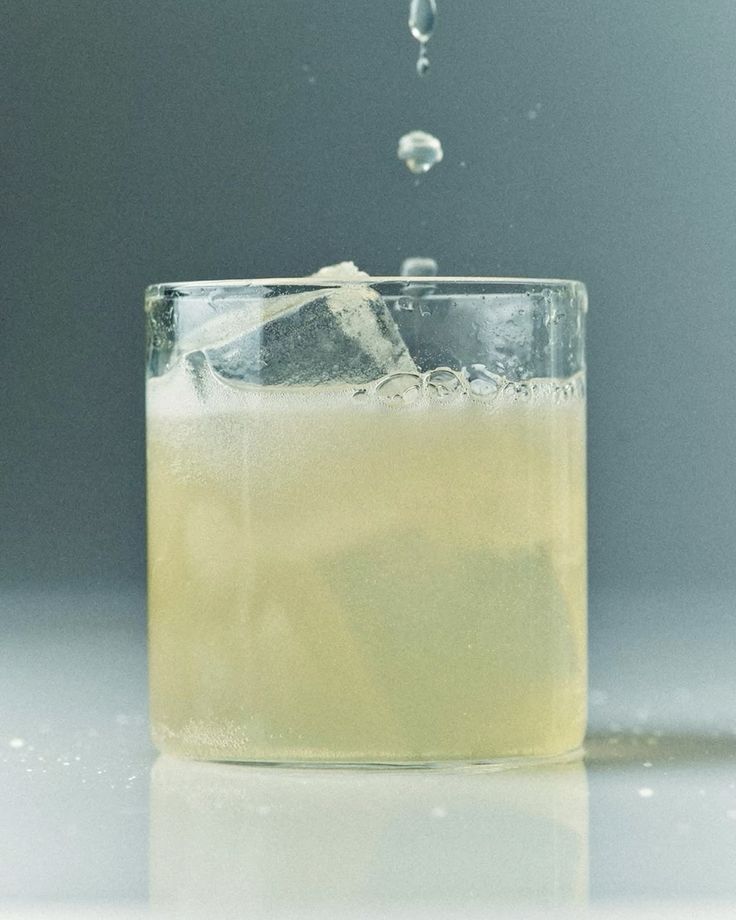
One stick. No scoop. Mixes clear. No grit. Five grams of Creavitalis® a day for cognitive performance, full-body tone, and lasting energy. Built for longevity.
References (13)
Kreider RB, et al. International Society of Sports Nutrition position stand: safety and efficacy of creatine supplementation in exercise, sport, and medicine. J Int Soc Sports Nutr. 2017;14:18.
Smith-Ryan AE, Cabre HE, Eckerson JM, Candow DG. Creatine supplementation in women's health: a lifespan perspective. Nutrients. 2021;13(3):877.
Hultman E, et al. Muscle creatine loading in men. J Appl Physiol. 1996;81(1):232–237.
Kreider RB. Creatine in Health and Disease: systematic review of structure-function evidence. 2020. 1,322 publications reviewed.
Xu C, Bi S, Zhang W, Huang Y. The effects of creatine supplementation on cognitive function in adults: a systematic review and meta-analysis. Front Nutr. 2024;11:1424972.
Prokopidis K, et al. Effects of creatine supplementation on memory in healthy individuals: a systematic review and meta-analysis of RCTs. Nutr Rev. 2023;81(4):416–427.
Gordji-Nejad A, et al. Single dose creatine improves cognitive performance and induces changes in cerebral high energy phosphates during sleep deprivation. Sci Rep. 2024;14:4937.
Brown AF, et al. Creatine supplementation and resistance training in naturally menstruating females: effects on sleep, strength, and body composition. Nutrients. 2024;16(16):2772.
Chilibeck PD, et al. Effects of creatine and resistance training on bone health in postmenopausal women. Med Sci Sports Exerc. 2015;47(8):1587–1595.
Chilibeck PD, et al. A 2-yr randomized controlled trial on creatine supplementation during exercise for postmenopausal bone health. Med Sci Sports Exerc. 2023;55(10):1750–1760.
Lanhers C, Pereira B, Naughton G, et al. Creatine supplementation and upper limb strength performance: a systematic review and meta-analysis. Sports Med. 2017;47(1):163–173.
Candow DG, Forbes SC, Chilibeck PD, et al. “Heads up” for creatine supplementation and its potential applications for brain health and function. Sports Med. 2023;53(Suppl 1):49–65.
Alzchem Trostberg GmbH. Creavitalis® specification and quality documentation; EFSA health claims 432/2021 and 2017/672.
*These statements have not been evaluated by the Food and Drug Administration. This product is not intended to diagnose, treat, cure, or prevent any disease. Future Creatine is a dietary supplement for healthy adults. If you are pregnant, nursing, taking medication, or have a medical condition, consult your physician before use. Studies summarized describe creatine monohydrate in the populations named; individual results vary.